Directory submissions are still one of the most misunderstood startup growth channels. Many founders think directories are outdated, low-quality, or only useful for backlinks. Others submit to dozens of sites once, then forget to update listings and wonder why results are weak.
The reality is different. Directory distribution can work very well when it is handled as a structured acquisition and credibility channel. For early-stage teams, it can produce discovery, referral traffic, review velocity, and brand trust with lower effort than many paid channels.
This guide is designed for Unicorn Platform users who want a clear and repeatable process. You will learn how to choose directories, optimize listings, automate submissions, track outcomes, and build a maintenance workflow that stays useful long after the initial launch.
Key Takeaways
Unveiling the Dimensions of Effective Directory Work
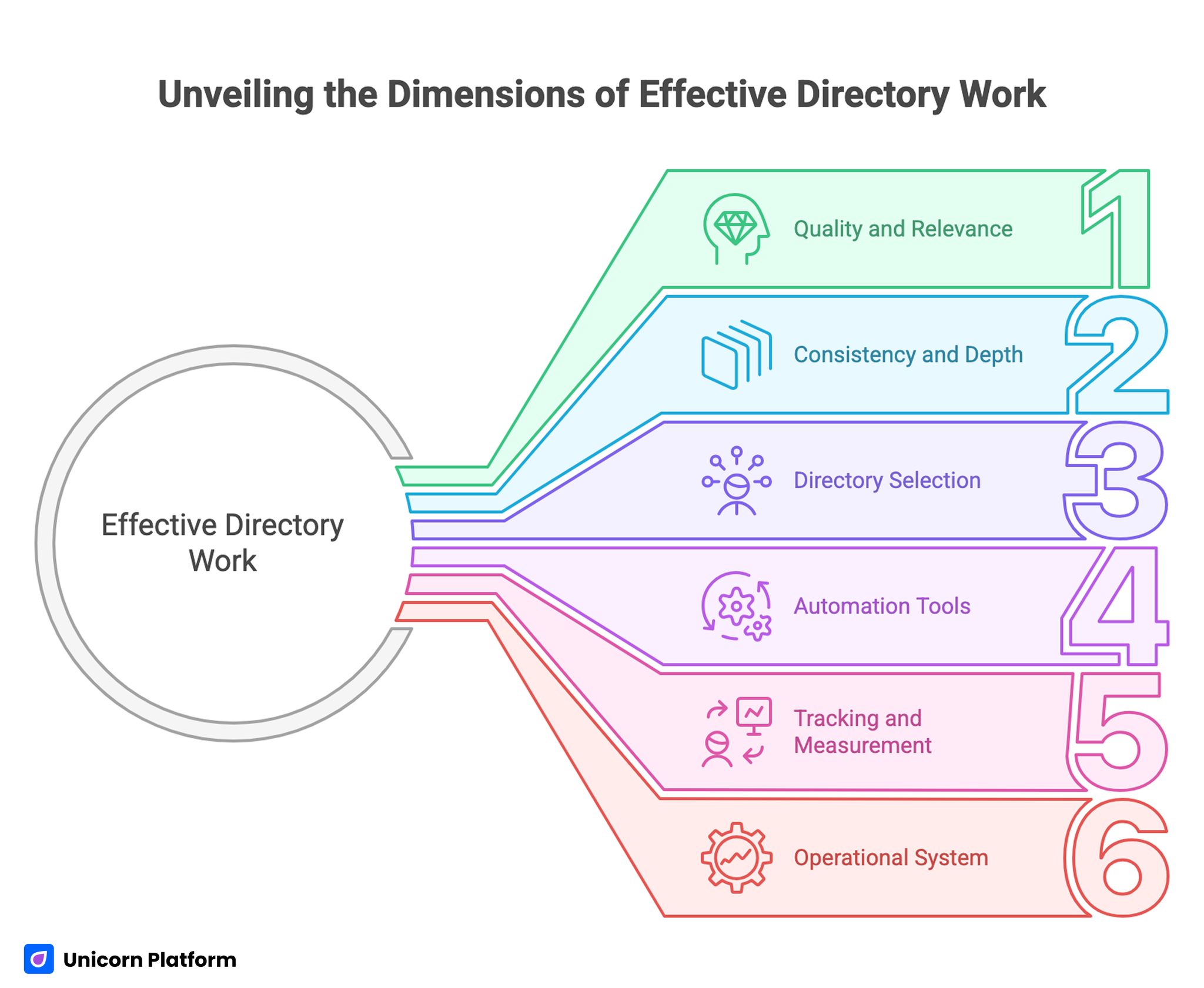
- Directory work is effective when quality and relevance are prioritized over raw volume.
- Listing consistency and profile depth matter as much as directory selection.
- Mainstream and niche directories should be combined in one structured plan.
- Automation tools can reduce operational overhead if used with clear standards.
- Tracking should focus on conversion signals, not only listing count.
- Unicorn Platform teams can turn directory distribution into a monthly operating system.
sbb-itb-bf47c9b
Why Directory Distribution Still Matters in 2026
Startups need dependable channels that build visibility and trust without requiring enterprise budgets. Directory ecosystems still attract high-intent audiences because users come there to compare products, read reviews, and shortlist solutions.
Directories also influence how your startup appears in research journeys. Buyers who find your brand in multiple trusted databases tend to view it as more established and reliable. This trust effect is valuable for young companies that have limited market history.
For teams using Unicorn Platform, directory distribution is especially practical because a clear landing page can support every listing with consistent messaging and conversion intent.
What Directory Submissions Actually Do for Growth
A strong directory program can support multiple outcomes at the same time.
Discovery and reach
Listings expose your startup to users who are already searching for alternatives in your category.
Credibility and social proof
Well-maintained profiles, category placement, and reviews make your brand look trustworthy during buyer evaluation.
Referral traffic
Many directories send targeted visits from users who are further down the decision path than general social traffic.
Search support
Directory presence can strengthen brand signals, citation consistency, and discoverability for relevant queries.
Sales enablement
Sales conversations often become easier when prospects have already seen your startup across known platforms.
These benefits are strongest when listings are accurate, complete, and actively maintained.
Common Reasons Directory Strategies Fail
Most weak results come from process errors, not from the channel itself.
Error 1: Quantity-first submissions
Submitting to many low-value websites creates noise, not meaningful visibility.
Error 2: Poor profile quality
Thin descriptions, weak screenshots, and missing use-case clarity reduce trust and click-through.
Error 3: Inconsistent positioning
If each listing describes a different value proposition, potential buyers cannot build clear understanding.
Error 4: No maintenance cycle
Listings become outdated quickly when pricing, features, and contact details change.
Error 5: No performance tracking
Without channel-level measurement, teams cannot identify which directories produce qualified pipeline.
A successful directory system fixes all five of these issues by design.
How to Choose the Right Directory Mix
How to Choose the Right Directory Mix
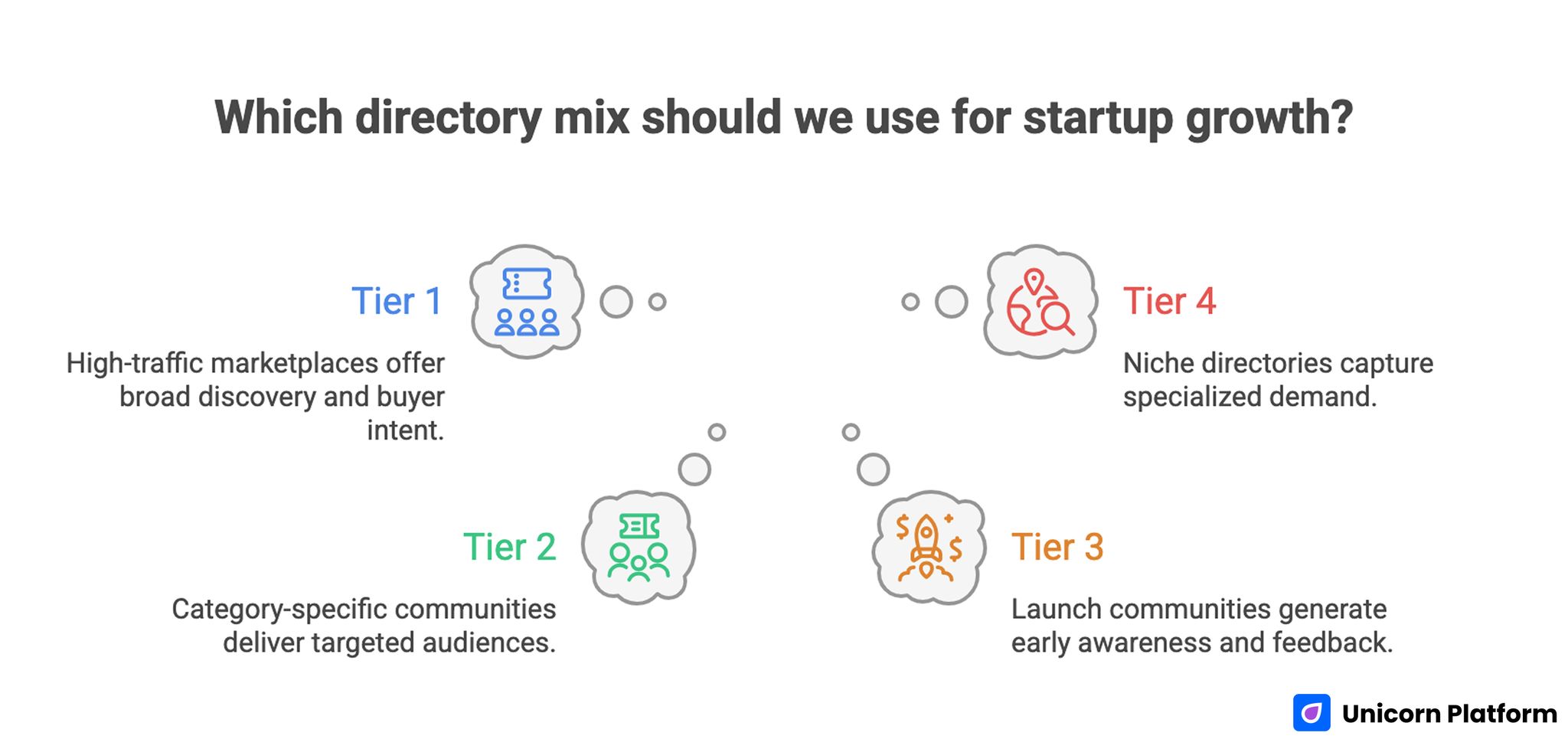
Use a tiered model so your resources are focused on impact.
Tier 1: High-traffic software marketplaces
These platforms offer broad software discovery and buyer intent. You should claim and optimize listings early on Capterra, GetApp, and G2.
Tier 2: Category-specific SaaS communities
Niche platforms often deliver more targeted audiences. Include options like SaaSGenius and SaaSHub where relevant.
Tier 3: Launch and discovery communities
Community-led platforms can generate early awareness, feedback, and social momentum. Product Hunt remains useful when launch timing and narrative are prepared properly.
Tier 4: Niche and local support directories
Depending on your market and geography, additional focused directories can help capture specialized demand.
This tiered approach helps teams avoid random submissions and maintain quality across key platforms.
Listing Quality Standards That Improve Results
Directory placement alone is not enough. Listing quality determines whether views turn into clicks and leads.
Use this minimum profile standard for every important listing:
- Clear one-sentence value proposition.
- Problem-focused product summary.
- Primary use cases and target users.
- Strong product visuals or screenshots.
- Relevant feature highlights.
- Proof signals such as reviews or outcomes.
- Accurate website and contact details.
- Clear CTA to a dedicated landing page.
If one listing cannot pass this standard, do not publish it yet.
Message Consistency Across Platforms
A startup can quickly lose trust if each directory shows different claims. Consistency should be managed deliberately.
Create a message control sheet that includes:
- Core value proposition.
- Three approved short descriptions.
- One long description.
- Product category tags.
- Top feature bullets.
- Brand tone and claim boundaries.
Use this sheet as the source for all listing updates. This keeps positioning coherent while still allowing platform-specific formatting.
Directory Submission Workflow: Manual vs Automated
Manual submission is possible for small batches, but it becomes expensive when you scale as part of a directory submission workflow. Automation tools can reduce repetitive work if you keep quality controls in place.
A hybrid model works well:
- Manual for high-priority profiles where custom positioning matters most.
- Automated for broad distribution and repeat updates.
This gives speed without giving up editorial quality.
The Role of ListingBott in a Startup Workflow
ListingBott can help teams distribute listings faster, especially when resources are limited and the directory set is large. Used correctly, it reduces operational overhead and increases consistency.
The main benefit is process compression. Instead of handling submissions one by one, teams can centralize data and push updates more efficiently. The key is to validate listing output and keep a review step before publish.
For Unicorn Platform users, ListingBott can serve as a distribution layer while Unicorn pages serve as conversion destinations.
Practical Preparation Checklist Before Submission
Do this once before your first full submission cycle.
Gather core assets
- Brand summary and short descriptions.
- Product screenshots and logo variants.
- Pricing overview and trial details.
- Contact and support links.
Define category logic
Select primary and secondary categories that match buyer search behavior.
Build one landing destination per intent
Map each listing CTA to a page that matches directory user intent rather than sending all traffic to one generic homepage.
Set review ownership
Assign who approves profile content and who owns monthly updates.
This setup step prevents most downstream quality problems.
How to Apply This in Unicorn Platform
Unicorn Platform Directory Submission Workflow
This is the execution framework for Unicorn Platform users.
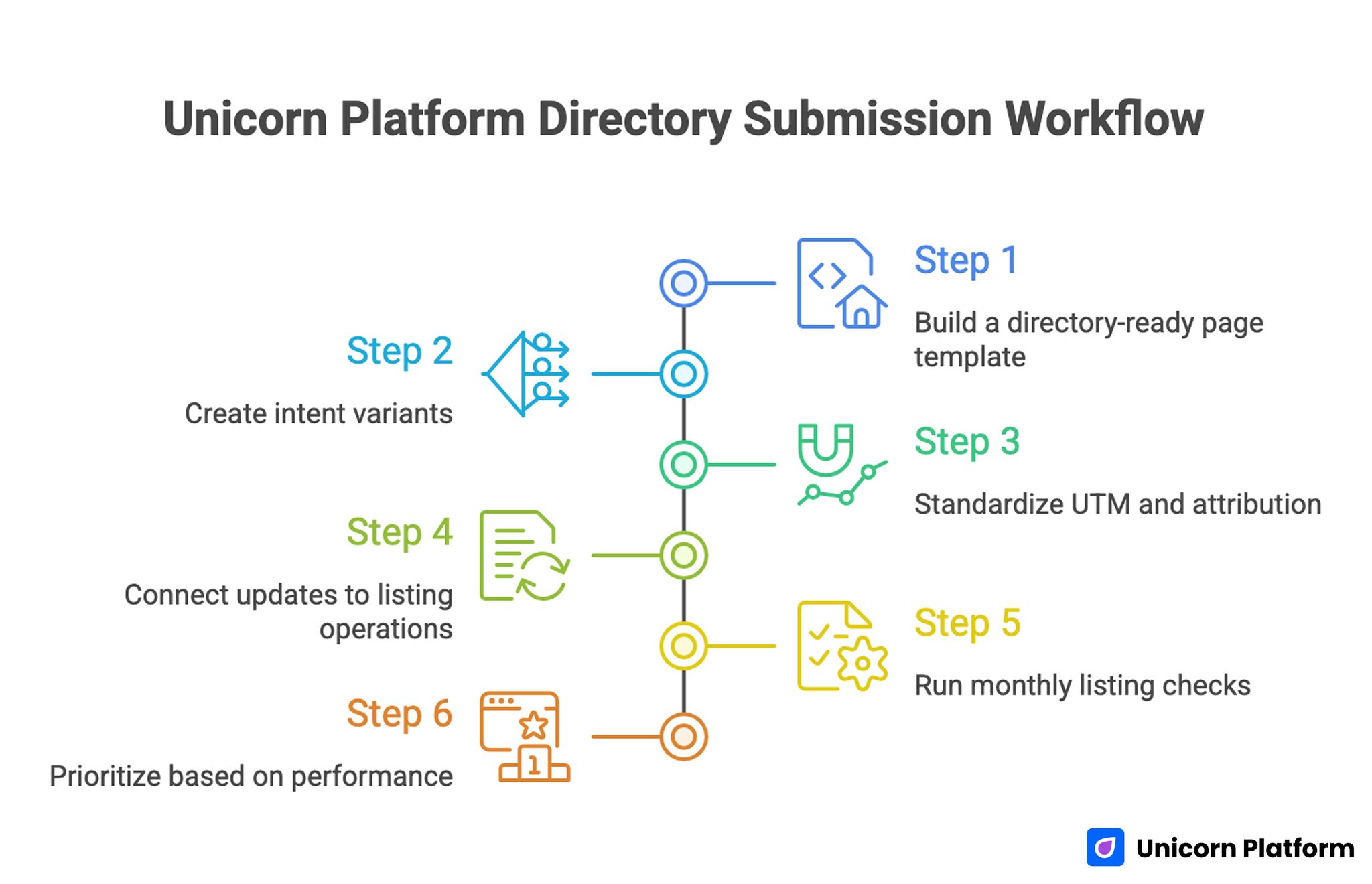
Step 1: Build a directory-ready page template
Create one reusable page architecture for directory traffic:
- Clear headline matching directory context.
- Fast product explanation.
- Proof and trust section.
- Feature and use-case breakdown.
- Focused CTA.
- FAQ for objections.
This structure gives directory visitors immediate clarity and reduces bounce.
Step 2: Create intent variants
Directory visitors from enterprise marketplaces behave differently from community launch traffic. Build at least two variants so messaging matches source intent.
Step 3: Standardize UTM and attribution
Use consistent tracking parameters by directory source. This makes channel performance review practical.
Step 4: Connect updates to listing operations
Whenever major page messaging changes, review top listings so directory content stays aligned.
Step 5: Run monthly listing checks
Review profile accuracy, links, screenshots, and call-to-action alignment on a fixed schedule.
Step 6: Prioritize based on performance
Invest more in directories that drive qualified sessions and conversion actions, not just impressions.
This workflow turns directory submissions into a managed growth asset instead of a one-time campaign.
Partner and Supporting Directory Examples
A balanced submission plan often includes broader discovery and niche-specific assets. Depending on your audience, a general Directory placement can help capture exploratory users, while category-focused directory submissions can support targeted visibility.
For SaaS-focused distribution, mainstream marketplaces remain essential, and specialized ecosystems like SaaSGenius and SaaSHub can complement them with high-relevance discovery paths.
During distribution planning, teams should also map how each directory source connects to a dedicated landing experience, ensuring message continuity from listing click to conversion action.
When describing your offer in submission templates, clarity about SaaS product scope and outcomes usually improves click quality and reduces low-intent traffic.
Consistency also depends on respecting each platform’s specific guidelines for formatting, claims, and profile completeness so listings remain visible and approved.
If your startup needs broader referral pathways, keeping messaging coherent across the most relevant platforms can strengthen buyer confidence and improve comparative evaluation outcomes.
Advanced Optimization for Better Directory Performance
After initial setup, optimization becomes the differentiator.
Improve description clarity
Rewrite profiles with stronger outcome language and clearer differentiation.
Upgrade visual assets
Use screenshots that show use-case value, not only UI fragments.
Build review velocity
Create a simple process to request genuine reviews from successful users.
Align category tags
Refine tags and categories based on actual referral quality.
Refresh CTA destinations
Update linked landing pages as positioning evolves.
These improvements often produce meaningful gains without adding new directories.
Tracking Model: What to Measure Monthly
Use a compact scorecard to guide decisions.
Core metrics:
- Sessions by directory source.
- Conversion rate by source.
- Trial or signup quality by source.
- Bounce rate by source.
- Assisted conversion contribution.
- Review growth and sentiment trends.
Also track operational metrics:
- Listing accuracy rate.
- Update completion rate.
- Time to publish profile changes.
This model helps teams prioritize the channels that produce real business value.
Avoiding Low-Quality Directory Risk
Not all directories are worth using. Some can waste time or weaken perceived brand quality.
Avoid directories that show clear spam patterns:
- irrelevant category placement
- no moderation standards
- suspicious outbound link behavior
- poor user experience
- low trust presentation
Quality-first selection is more durable than aggressive volume tactics.
Launch-Day and Post-Launch Checklist
Launch-day
- Validate all links and UTM parameters.
- Verify profile text consistency.
- Confirm page-message match.
- Test conversion flow from listing click.
Post-launch week one
- Review source traffic quality.
- Identify high-bounce listings.
- Adjust descriptions or CTA destination if needed.
Post-launch month one
- Compare performance by directory tier.
- Increase effort on top-performing sources.
- Update underperforming listings with revised messaging.
This staged review reduces wasted effort and accelerates learning.
Team Roles for Reliable Execution
Directory strategy breaks down when ownership is unclear. Use a simple role model:
- Strategy owner: directory selection and prioritization.
- Content owner: profile copy and asset quality.
- Operations owner: submission process and updates.
- Analytics owner: measurement and reporting.
One person can hold multiple roles in a small team, but responsibilities should still be explicit.
Directory Scoring Model You Can Reuse
A scoring model helps teams avoid subjective decisions when selecting or dropping directories. Without one, teams often keep low-value platforms simply because they already invested time there.
Use a 100-point score per directory:
- Audience relevance: 25 points
- Traffic quality signals: 20 points
- Listing control and profile depth: 15 points
- Review ecosystem and trust value: 15 points
- Referral conversion potential: 15 points
- Maintenance effort required: 10 points
Set a threshold for active participation. For example, keep only directories scoring above 60 in your active portfolio unless there is a strategic exception.
Re-score every quarter. Directory quality and audience behavior shift over time, and what worked six months ago may not justify effort now.
Writing Better Directory Descriptions
Most startup descriptions fail because they are feature lists without context. Buyers scanning directories need fast clarity: what problem is solved, for whom, and why this option is credible.
A useful description format:
- One-line category and outcome statement.
- Two lines on who it is for.
- Three key capabilities linked to outcomes.
- One trust signal.
- One clear next action.
Keep language concrete. Replace broad claims like “best-in-class” with specifics that buyers can evaluate quickly.
Use short paragraphs and predictable structure so users can scan and compare easily. High readability is a competitive advantage in dense marketplace pages.
Review Strategy for Stronger Trust Signals
Reviews can be one of the strongest conversion multipliers in directory ecosystems, but only when the process is consistent and ethical.
Use a lightweight review system:
- Ask after clear value moments, not randomly.
- Keep request language short and specific.
- Never script fake praise or force positive framing.
- Route feedback to the right profile by use case.
Track review quality, not only review count. Detailed reviews that mention real use patterns usually influence decisions more than short generic ratings.
For startups, this process can be integrated into onboarding and success workflows with minimal overhead.
Landing Page Match: The Most Important Conversion Lever
Even strong directory profiles underperform when the destination page is generic. Listing click intent should match page message immediately. For recruiting-focused distribution, use a job board template for startup hiring pages so visitors land on open roles, not on a general company overview.
If a directory visitor arrives from a “project management software” category, the landing page should confirm that use case in the first screen. If a visitor comes from a “startup tools” community listing, the page should address startup context quickly.
A mismatch between listing promise and landing page narrative increases bounce and reduces trust. Fixing this often improves performance faster than adding new directories.
Use intent-aligned variants instead of one universal page. This is practical in Unicorn Platform because block-level duplication and adaptation are fast.
Niche vs Mainstream Directories: How to Balance
Mainstream platforms provide broad exposure and high trust, but they also contain heavy listing density. Niche platforms usually have smaller traffic but better audience alignment.
The best portfolio typically includes both:
- Mainstream for credibility and broad top-funnel reach.
- Niche for qualified discovery and clearer positioning.
Startups should avoid overcommitting to one side. Overreliance on mainstream listings can reduce differentiation, while overreliance on niche listings can limit total visibility.
Balance is achieved through measurement. Keep whichever mix produces qualified conversions and sustainable maintenance effort.
Operational SOP for Monthly Listing Maintenance
Directory performance decays when listings are not maintained. A simple monthly SOP keeps quality stable.
Monthly SOP checklist:
- Verify profile accuracy for key fields.
- Update screenshots if UI changed.
- Refresh description lines if positioning changed.
- Check all outbound links and UTM tags.
- Review new feedback and respond where possible.
- Compare referral conversion trend by source.
This process usually takes less time than teams expect once templates and ownership are in place.
Advanced Tracking: From Clicks to Pipeline
Basic referral sessions are useful but not enough. Directory channels should be linked to business outcomes.
Add source-aware tracking for:
- Trial start quality
- Activation completion
- Demo booking
- Sales-qualified lead rate
- Revenue contribution window
If your CRM setup allows it, store directory source as a persistent attribute so later lifecycle actions can be tied back to original discovery channel.
This helps teams identify which listings generate durable business value rather than short-lived traffic spikes.
Handling Duplicate and Inconsistent Listings
As startups grow, duplicate listings often appear across platforms with conflicting details. This creates trust friction and can hurt conversion quality.
Fix this with a three-step cleanup process:
- Audit existing listing footprint and detect duplicates.
- Consolidate where possible and remove low-quality duplicates.
- Push standardized profile data to active listings.
Repeat this audit twice per year. It prevents gradual drift and keeps directory presence coherent.
Localization and Region-Specific Strategy
If your startup sells in multiple regions, listing strategy should include regional relevance. Some directories perform better in specific markets and categories.
Localization practices:
- Use region-appropriate phrasing in profile copy.
- Link to region-relevant landing pages where needed.
- Highlight local compliance or support capabilities when relevant.
- Track performance by region to guide investment.
Global consistency matters, but regional adaptation often improves conversion and buyer confidence.
Listing QA Before Submitting at Scale
Automation can speed submissions, but quality checks should happen before broad rollout.
Pre-scale QA checklist:
- Category selection reviewed by strategy owner.
- Description consistency checked against source sheet.
- Visual assets validated on desktop and mobile previews.
- CTA destination tested.
- Profile fields validated for completeness.
This upfront QA prevents large-scale propagation of weak listings and saves rework later.
Integrating Directory Work With Launch Cycles
Directory distribution is most effective when aligned with product and campaign milestones.
Good timing windows:
- Feature launches
- Pricing updates
- New positioning narratives
- Major integration releases
- Public roadmap announcements
During these moments, refreshed listings can amplify momentum and improve discovery in high-intent research periods.
Avoid long delays between launch messaging and listing updates. Inconsistency during launch windows can reduce trust quickly.
Risk Management and Brand Safety
Directory ecosystems vary in moderation quality and content standards. A basic risk protocol helps protect brand integrity.
Risk protocol elements:
- Approved claims list and prohibited claims list.
- Response standards for public feedback.
- Escalation path for false or harmful profile edits.
- Routine review of category placement and related listings.
This is especially important for startups in regulated or high-trust categories where wording quality directly affects credibility.
AI-Assisted Listing Improvement Loop
AI can support listing optimization beyond initial creation. Use it in a monthly loop to improve clarity and conversion.
Suggested loop:
- Pull top and low-performing listings.
- Generate revised descriptions with stricter clarity constraints.
- Compare readability and intent alignment.
- Publish small updates and monitor effects.
Keep final approval human. AI drafts can accelerate iteration, but final publication should be reviewed for positioning and factual precision.
Cross-Functional Reporting Template
Directory work performs best when marketing, product, and sales share visibility into outcomes. A simple monthly report can align actions.
Include:
- Top five directories by qualified conversions.
- Underperforming listings and probable causes.
- Listing updates completed this month.
- Review growth and sentiment summary.
- Next-month optimization priorities.
This report keeps directory activity connected to business goals and prevents it from becoming isolated checklist work.
Practical Content Blocks for Unicorn Platform Pages
To improve conversion from directory traffic, include focused blocks that answer buyer questions quickly.
Recommended blocks:
- “Who this is for” block with concrete user profiles.
- “Why teams switch” block with short practical reasons.
- “What you can launch in week one” block for fast expectation setting.
- “How to evaluate fit” checklist block.
- “Next step” CTA block with one primary action.
These blocks reduce ambiguity and help directory visitors self-qualify faster.
Updating Listings After Product Changes
Product changes often outpace listing updates. This creates stale messaging and trust friction.
Use a change-trigger system:
- Trigger update when core feature set changes.
- Trigger update when pricing model changes.
- Trigger update when target user segment changes.
- Trigger update when onboarding flow changes materially.
Assign a time-to-update SLA, such as seven days after change publication. This keeps your external footprint consistent with current reality.
Resource Allocation: Where to Spend Time First
Startups rarely have unlimited bandwidth. Directory work should follow impact-first allocation.
Priority order:
- Top three high-intent directories.
- One or two niche directories with strong audience fit.
- Community launch platform cadence.
- Experimental long-tail platforms.
This sequencing helps small teams generate results before expanding scope.
Continuous Improvement Principles
Directory distribution should evolve with your product and audience. Use three principles to stay effective:
- Simplicity: keep processes lightweight and repeatable.
- Consistency: maintain message alignment across listings and pages.
- Evidence: prioritize updates based on measured outcomes, not assumptions.
Teams that follow these principles usually get better long-term performance with less operational stress.
8-Week Operating Plan for Startups
Week 1
Finalize directory tiers, messaging sheet, and destination page templates.
Week 2
Claim and optimize all Tier 1 listings.
Week 3
Publish Tier 2 listings with niche-specific descriptions.
Week 4
Launch community and discovery submissions with launch-ready assets.
Week 5
Audit performance data and identify top referral sources.
Week 6
Improve underperforming listings and update linked page variants.
Week 7
Run review outreach and social proof collection process.
Week 8
Document learnings and lock monthly maintenance workflow.
This timeline is realistic for lean teams and creates momentum without overwhelming operations.
FAQ: Directory Submissions for Startups
1. Are directory submissions still useful for startups in 2026?
Yes, when done with quality controls and ongoing maintenance. They work best as part of a broader growth system, not a standalone tactic.
2. Should we submit to as many directories as possible?
No. Focus on relevance, trust, and audience fit. Quality submissions usually outperform high-volume low-quality distribution.
3. What is the best first directory set for a SaaS startup?
Start with high-intent marketplaces, then expand into niche and community channels once core profiles are strong.
4. How often should listings be updated?
Monthly checks are a good baseline, with immediate updates for major product, pricing, or positioning changes.
5. Can automation replace manual listing work fully?
Automation helps with speed and consistency, but high-priority listings still benefit from manual editorial review.
6. What should we optimize first if conversions are low?
Check message match between listing and landing page, then improve profile clarity and CTA destination quality.
7. How do we measure directory ROI properly?
Track source-level conversion actions, lead quality, and assisted revenue impact, not just listing count or impressions.
8. Is Product Hunt enough for discovery?
No. It can help launch visibility, but long-term discovery usually needs a wider directory portfolio.
9. What is the biggest operational mistake in directory work?
Treating submission as a one-time task. Without maintenance, listing quality decays and results decline.
10. Why use Unicorn Platform for directory traffic landing pages?
It supports fast page iteration, clear section control, and practical workflows for ongoing optimization.
Final Takeaway
Directory submissions still create meaningful startup growth when managed as an operating system. The winning model is simple: choose the right platforms, publish high-quality profiles, align listings with strong Unicorn Platform landing pages, and maintain a monthly optimization rhythm. Teams that do this consistently can turn directory visibility into steady pipeline and stronger market credibility.


