Table of Contents
- What the Best Personal Blog Websites Consistently Do Well
- Content Architecture That Compounds Over Time
- 30-Day Personal Blog Launch Plan
- Common Mistakes and How to Fix Them
- FAQ
A personal blog can be your most durable digital asset, but only if it is built with intention. Many creators publish consistently and still struggle to grow because their site does not clearly communicate perspective, audience fit, or next steps for readers.
The problem is rarely writing effort. The real issue is usually architecture. If your homepage, post structure, and subscriber path are disconnected, readers consume one article and leave without deeper engagement.
This guide explains how to build a personal blog website that reflects your voice and supports measurable growth. You will learn how to choose the right platform setup, structure your content for discoverability, and turn reader trust into long-term opportunities without sacrificing authenticity.
If your broader positioning includes consulting, speaking, or career growth, this personal professional website guide is a useful companion for aligning blog strategy with your overall brand presence.
sbb-itb-bf47c9b
Quick Strategic Takeaways
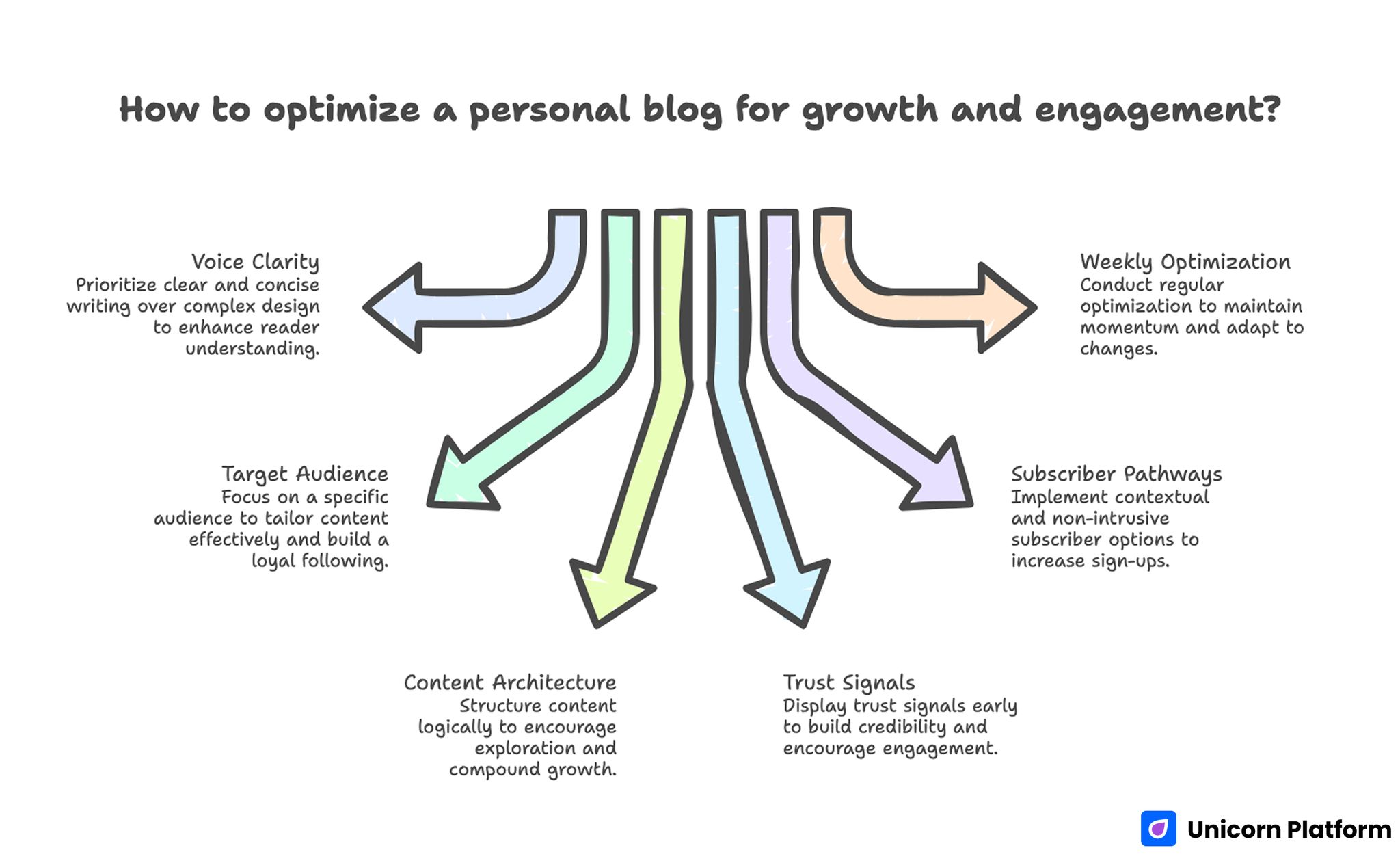
Quick Strategic Takeaways for Best Personal Blog Websites
- Voice clarity matters more than design complexity.
- A personal blog should serve one clear audience before serving everyone.
- Content architecture determines whether growth compounds.
- Trust signals should appear early, not only on the About page.
- Subscriber pathways should be contextual, not intrusive.
- Weekly optimization beats occasional full redesigns.
Why Personal Blogs Still Win in 2026
Audience behavior continues to favor direct creator trust. Social platforms can help discovery, but your blog is where long-form credibility is built and where you own the reader relationship.
A strong personal blog also gives you editorial control. You decide topic depth, page structure, and how readers move from ideas to next actions.
According to Edelman’s Trust Barometer research, audiences are significantly more likely to engage with content when they perceive the source as both competent and authentic, reinforcing the importance of clear voice positioning and visible credibility signals on personal blogs.
Ownership is especially important when algorithms shift. If your audience only exists on external platforms, growth can decline suddenly without clear recovery options.
Blog-led creators usually build stronger long-term leverage because each article can keep generating value through search, internal linking, and newsletter distribution. This creates a compounding system rather than a short-term posting cycle.
What the Best Personal Blog Websites Consistently Do Well
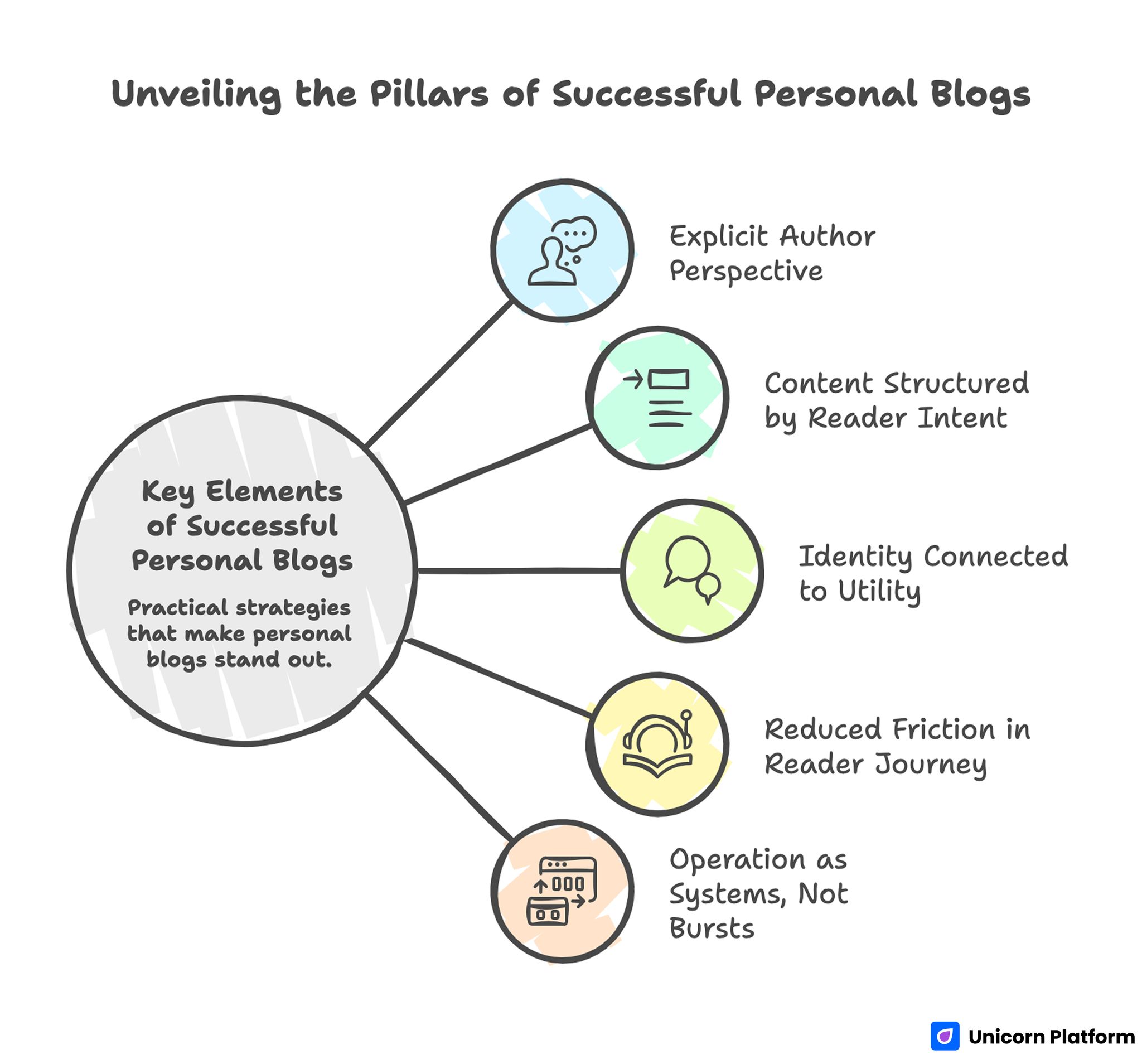
Unveiling the Pillars of Successful Personal Blogs
High-performing personal blog websites vary in style, but they share practical strategic patterns.
1. They make the author perspective explicit
Readers quickly understand what the creator believes, what topics are covered, and why that perspective is worth following. This reduces audience mismatch and improves retention quality.
2. They structure content by reader intent
Instead of random chronological browsing, strong blogs help users navigate by problems and outcomes. Readers can quickly find beginner content, deeper frameworks, and advanced analysis.
3. They connect identity to utility
The blog feels personal, but each post still solves a specific reader need. This balance between voice and usefulness is the main reason people return.
4. They reduce friction in the reader journey
Navigation is clean, article formatting is readable, and subscription opportunities appear naturally where value is already proven.
5. They operate as systems, not publishing bursts
Top creators use repeatable editorial workflows, review cycles, and update routines. The blog evolves steadily instead of depending on occasional motivation spikes.
Choosing the Right Personal Blog Platform Strategy
Platform choice is not only a technical decision. It determines how quickly you can publish, how easily you can maintain structure, and how well your site supports future growth paths.
When evaluating setup options, start with your operating model. If you want fast publishing and easy structural updates, prioritize low-friction editing and modular page control over feature overload.
Key platform criteria:
- editorial speed for non-technical publishing
- clean reading experience on desktop and mobile
- reliable content organization for multi-topic growth
- flexibility for custom sections and trust elements
- practical integration with analytics and email workflows
Avoid selecting tools only by template visuals. A beautiful theme with slow editing workflows can hurt consistency and delay iteration.
For creators who need a straightforward way to maintain identity and clarity across pages, this personal web profile framework can help connect blog content with broader positioning.
Defining Your Voice Positioning Framework
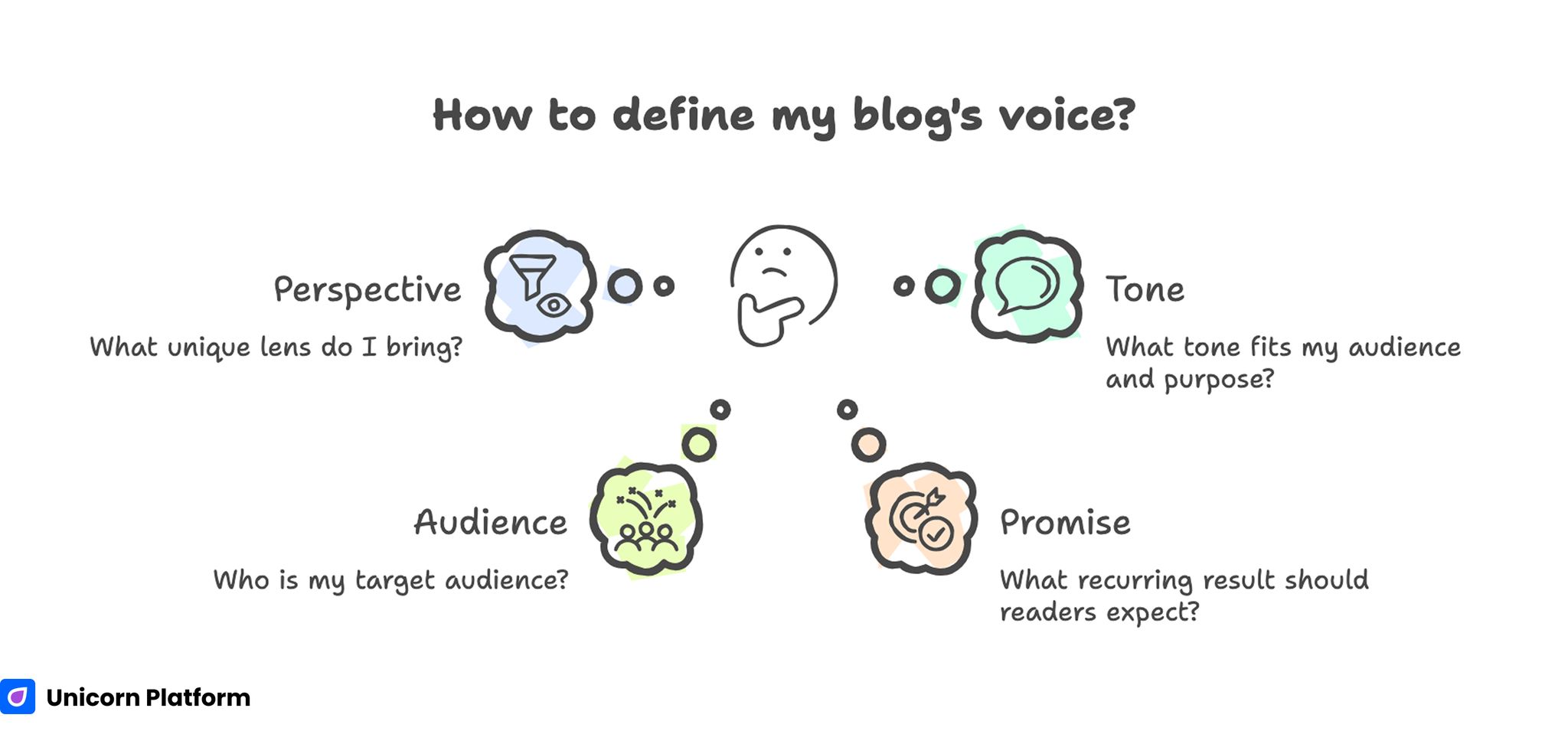
Defining Your Voice Positioning Framework
Voice is not just tone. It is the combination of perspective, topic boundary, and reader promise.
Without a voice framework, even strong articles can feel disconnected. Readers may like individual posts but fail to understand your long-term value.
Use this four-part framework:
Perspective
What unique lens do you bring that readers cannot get from generic summaries? This might come from your role, experience, or decision-making style.
Audience
Who is this content for right now? Early-stage creators often improve faster when they focus on one clear audience segment before expanding.
Promise
What recurring result should readers expect if they follow your work? The promise should be practical enough to measure over time.
Tone
Choose a tone that fits your audience and purpose. Analytical, narrative, and tactical styles can all work, but inconsistency weakens trust.
When this framework is documented, content planning gets easier and quality control gets faster.
Content Architecture That Compounds Over Time
Publishing frequency alone does not create compounding growth. Structure does.
A practical blog architecture usually includes three layers.
Layer 1: Pillar topics
Define three to five core themes that represent your long-term authority direction. These should align with audience demand and your expertise.
Layer 2: Cluster content
For each pillar, create supporting posts that address specific questions at different depth levels. This improves discoverability and keeps readers inside your ecosystem.
Layer 3: Evergreen anchors
Maintain a small set of foundational guides that remain relevant and can be updated periodically. These pages often become your highest-value acquisition assets.
Architecture also improves editorial efficiency. Instead of asking "what should I write this week," your team asks "which cluster gap should we close next."
Homepage Blueprint for Personal Blogs
Your homepage is not only a list of recent posts. It is your orientation layer for first-time readers.
A high-performing homepage usually includes:
- a short value statement with clear audience fit
- featured pathways by topic or reader intent
- concise author context and credibility
- one primary subscriber or contact action
- recent or anchor content with clear labels
The main objective is to help visitors decide where to start quickly. If users cannot find a relevant path in the first screen or two, they often leave before understanding your work.
For creators who also run campaign-style pages, patterns from this personal landing page guide can improve first-impression clarity without making the homepage feel sales-driven.
Article Structure That Improves Read Depth and Return Visits
Consistent article structure helps readers process ideas faster and trust your content quality.
A practical format:
- Opening context that defines why the topic matters now.
- Clear section progression from problem to framework to application.
- Practical examples that show real implementation logic.
- Concise close that gives one useful next action.
This format works across educational, opinion, and hybrid posts because it keeps readers oriented while preserving your personal voice.
Formatting standards also matter. Shorter paragraphs, clear headings, and strategic emphasis improve scan behavior without reducing depth.
Subscriber Growth Without Trust Erosion
Subscriber growth is strongest when it follows value moments. Aggressive popups can increase short-term signups but often reduce long-term relationship quality.
Use contextual subscription opportunities tied to reader intent. If someone finishes a framework-heavy article, offer a related deep-dive sequence rather than a generic "join my newsletter" prompt.
Keep forms short and value propositions specific. Readers should know what they will receive, how often they will receive it, and why it will be useful.
If your current conversion path feels unclear, these personal website improvement tips can help tighten homepage, CTA, and reader-path consistency before you scale promotion.
SEO for Personal Blogs Without Losing Voice
SEO should amplify your perspective, not flatten it.
Additionally, guidance from Google Search Central emphasizes the value of helpful, people-first content built around experience and expertise, which aligns directly with structuring blog architecture around intent clarity rather than keyword density alone.
Start by matching each post to one core intent. Then support that intent with clear headings, descriptive titles, and related internal links that guide deeper exploration.
Avoid forcing exact phrases unnaturally. Natural language with strong topical relevance tends to perform better for both readers and search systems.
Technical consistency matters too. Fast page load, clean mobile rendering, and optimized media support both discoverability and user experience quality.
The most effective personal blogs treat SEO as structure and clarity work, not as keyword repetition.
30-Day Personal Blog Launch Plan
Week 1: Positioning and baseline setup
Document voice framework, define pillars, and build core pages. Focus on clarity before design polish.
Week 2: Foundational content build
Publish three to five high-value posts mapped to core pillars. Add internal links to establish reader pathways.
Week 3: Subscriber pathway activation
Implement one primary email capture flow with contextual placement. Keep forms short and offers specific.
Week 4: Performance review and iteration
Review read depth, subscriber conversion, and top entry pages. Update the strongest pages first to improve early momentum.
60-Day Compounding Growth System
Days 1-20: Stabilize message and structure
Refine homepage clarity, improve top article intros, and ensure each pillar has at least one strong anchor post.
Days 21-40: Expand clusters and reader journeys
Add supporting posts to close content gaps and improve internal linking between beginner and advanced resources.
Days 41-60: Improve conversion quality
Test CTA placement, optimize About page trust flow, and refine post-conversion email experience to improve subscriber quality.
This phased model keeps growth practical for small teams while building durable content assets.
Turning a Personal Blog Into Opportunity Capture
A personal blog can generate consulting leads, speaking opportunities, collaborations, and hiring interest when pathways are explicit.
Add a clear contact structure that explains what inquiries are relevant, what response timeline to expect, and where to find supporting credibility context.
A short "work with me" section can perform well when it is tied to proven expertise areas rather than broad service claims.
Opportunity capture should stay contextual. If your content helps readers solve real problems, invitations to collaborate feel natural instead of promotional.
Weekly Editorial QA and Optimization Routine
Use a fixed weekly review to keep quality high and avoid random changes.
Review checklist:
- top entry pages and their first-screen clarity
- read depth by article type
- subscriber conversion by page
- internal click paths between related posts
- outdated posts requiring refreshes
Then pick one bottleneck and run one focused improvement cycle. This creates clearer attribution and faster learning than broad simultaneous edits.
Documentation is critical. Record what changed, why it changed, and what happened after the change window.
Editorial Operations System for Solo Creators and Small Teams
Great personal blogs are built through repeatable operations, not bursts of inspiration. Even a strong writer can lose momentum when publishing decisions are made from scratch every week. An operations system protects consistency while preserving creative flexibility.
Start with a lightweight planning board that tracks ideas by pillar, intent, and stage. Keep categories simple enough to maintain: idea, drafting, editing, ready to publish, and scheduled refresh. This structure makes bottlenecks visible and helps you decide what to ship next without guesswork.
Assign a clear objective to each new article before drafting begins. Common objectives include search discovery, subscriber conversion, trust building, or opportunity capture. When the objective is explicit, the article structure and CTA logic become easier to align.
Batch similar tasks to improve output quality. Drafting several intros in one session, for example, helps keep message standards high because you compare opening clarity across multiple posts. A batching approach also reduces context switching, which is often the hidden cost in creator workflows.
Use an editorial checklist at three checkpoints: first draft complete, pre-publish review, and post-publish audit. The first checkpoint confirms structure and argument flow. The second verifies readability, internal links, and conversion alignment. The third captures performance signals and next edits.
For teams with limited time, a two-hour weekly operations block can be enough to maintain progress. Spend one hour on planning and one hour on updates to existing assets. This schedule keeps your archive active instead of treating old posts as finished forever.
Content Refresh Model That Improves Compounding Results
Refreshing top content is one of the highest-return activities for personal blogs. New posts matter, but updates to existing winners often produce faster gains in traffic quality and subscriber growth.
Create a monthly refresh queue with three inputs: top traffic posts, top conversion posts, and declining posts that still match your core pillars. This queue gives you a balanced set of opportunities rather than reacting only to what recently dropped.
During each refresh cycle, prioritize four types of updates. First, improve first-screen clarity so new readers understand relevance quickly. Second, replace vague examples with clearer practical context. Third, strengthen internal pathways to related posts. Fourth, align CTA messaging with current audience needs.
Track refresh impact over a 30-day window before making additional major changes. If a refresh improves read depth but lowers conversion, the next update should focus on action clarity rather than rewriting the whole piece again. This measured approach prevents unstable iteration.
A refresh model also supports voice consistency. As your perspective evolves, older posts can drift away from current positioning and confuse new readers. Regular updates keep your archive coherent, which increases trust and improves the overall experience of moving through your content ecosystem.
Common Mistakes and How to Fix Them
Mistake 1: Publishing without audience focus
Wider topics can attract impressions but weak retention. Re-anchor each article to one reader context and one practical outcome.
Mistake 2: Prioritizing style over readability
Complex layouts can reduce comprehension. Simplify structure and ensure text presentation supports fast scanning.
Mistake 3: Weak homepage orientation
If readers cannot quickly identify what to read next, session depth declines. Add clear topic pathways and one visible primary action.
Mistake 4: Generic subscriber messaging
Vague newsletter prompts underperform. Replace generic asks with specific value statements and content expectations.
Mistake 5: Inconsistent internal linking
Without intentional link pathways, readers exit after one post. Build structured routes between foundational and advanced content.
Mistake 6: No update rhythm for older content
Even strong posts decay without maintenance. Schedule monthly refreshes for top traffic and top conversion pages.
Mistake 7: No performance documentation
Teams repeat weak experiments when lessons are not recorded. Maintain a simple editorial log with hypotheses and outcomes.
FAQ: Building Personal Blog Websites That Grow
What makes a personal blog website different from a general blog?
A personal blog is centered on a creator perspective and relationship-building over time. It should combine expertise, voice, and clear reader pathways rather than only publishing broad-topic content.
How many core topics should I start with?
Three to five pillars is a strong starting range for most creators. This keeps focus clear while leaving room for growth and experimentation.
How often should I publish on a personal blog?
Consistency matters more than aggressive frequency. A predictable cadence with solid quality usually outperforms sporadic high-volume publishing.
Do I need a separate homepage strategy if I already publish often?
Yes, because publishing and orientation are different functions. A strong homepage helps first-time visitors find relevant starting points quickly.
Where should I place newsletter CTAs in blog content?
Place them after value is demonstrated, not before. Contextual placement usually improves conversion quality and preserves reader trust.
How do I keep SEO strong without sounding generic?
Focus on intent clarity, useful structure, and natural language. SEO works best when it supports your perspective instead of replacing it.
What is the best first optimization step for a slow-growing blog?
Improve first-screen clarity on your top entry pages and tighten internal link pathways. These updates often increase both read depth and conversion outcomes quickly.
Should I separate opinion posts from practical guides?
Yes, if your audience needs both. Clear labeling and navigation helps readers choose the right content type for their current intent.
How do I know if my voice is consistent enough?
Review your last ten posts for perspective, tone, and promise alignment. If readers can predict your value style across topics, voice consistency is working.
Can a personal blog support business goals without feeling salesy?
Yes, when commercial pathways are contextual and evidence-based. Relevance and trust should lead the invitation, not aggressive promotion.
Final Takeaway
The best personal blog websites do not rely on volume alone. They pair strong voice positioning with clear structure, readable execution, and deliberate growth workflows.
With Unicorn Platform, creators can run this model quickly and consistently. When your blog is treated as an evolving system instead of a publishing archive, your voice becomes easier to discover, easier to trust, and much more likely to compound into real opportunities.


